


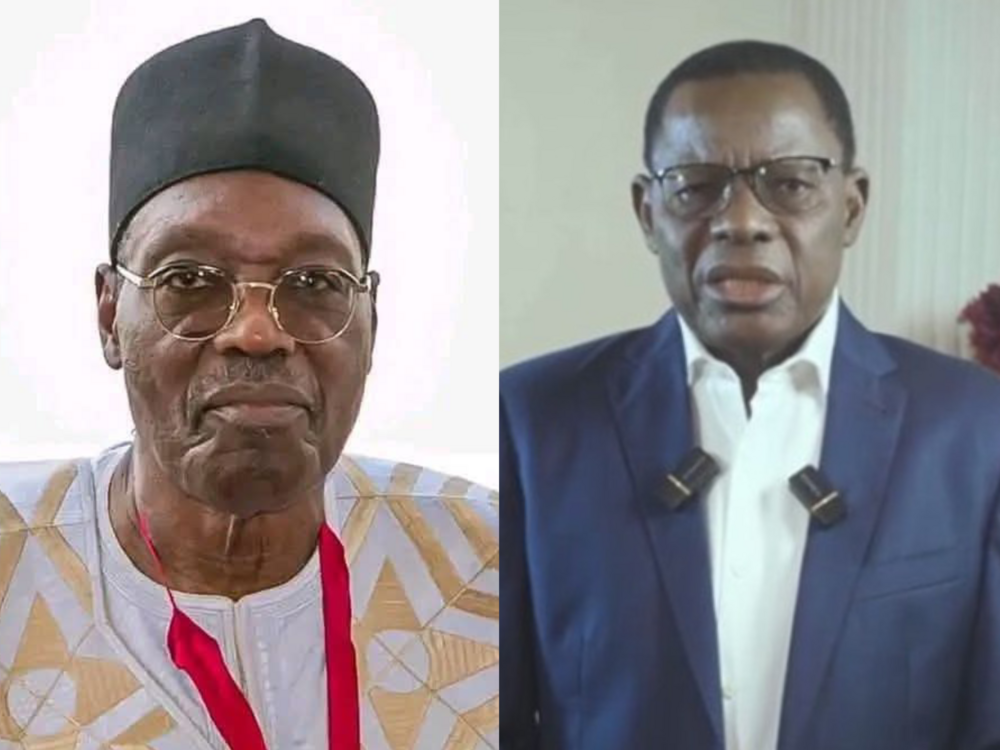
Maurice Kamto, leader of the Cameroon Renaissance Movement (MRC), on Friday received Issa Tchiroma Bakary, a presidential candidate and prominent opposition figure, in a gesture of solidarity through dialogue.
Kamto announced on his social media that he hosted Tchiroma, president of the National Front for the Salvation of Cameroon (FSNC) and one of the 11 contenders challenging incumbent President Paul Biya in the October 12 election.
Tchiroma was accompanied by two aides. According to Kamto, their talks were “frank and cordial,” reflecting a spirit of dialogue and consultation among opposition leaders in the run-up to the vote.
Tchiroma’s campaign later confirmed the visit in an official statement, describing it as taking place in a political context marked by “electoral injustices and manoeuvres aimed at weakening the forces of change.” The statement called the meeting “a gesture of respect and solidarity” and an expression of support for Kamto, who is seen as “a key opposition figure unfairly excluded from the presidential race.”
It further underlined that the visit illustrated “the strength of unifying leadership, prioritising the national interest over personal ambition” and marked “another step toward building the common front necessary to lead Cameroon toward a genuine democratic transition.”
The meeting came hours after Kamto officially announced his resignation from the African Movement for New Independence and Democracy (MANIDEM), under which he had initially filed his candidacy before it was invalidated by the Constitutional Council for “dual nomination.”
Kamto denounced the ruling as a “political maneuver” aimed at sidelining the MRC, already weakened by the postponement of legislative and municipal elections to March 2026.
Following a September 6 resolution by the MRC’s National Council calling on him to resume his mandate as national president, Kamto quit MANIDEM “with immediate effect,” while praising the “patriotic spirit” of MANIDEM leader Georges Anicet Ekane and the goodwill of the party’s executives and members.
Although excluded from the ballot, Kamto remains a powerful political voice and has reassured his supporters that “the struggle continues,” while Biya, in power since 1982, seeks an eighth term.
AC/sf/lb/as/APA

