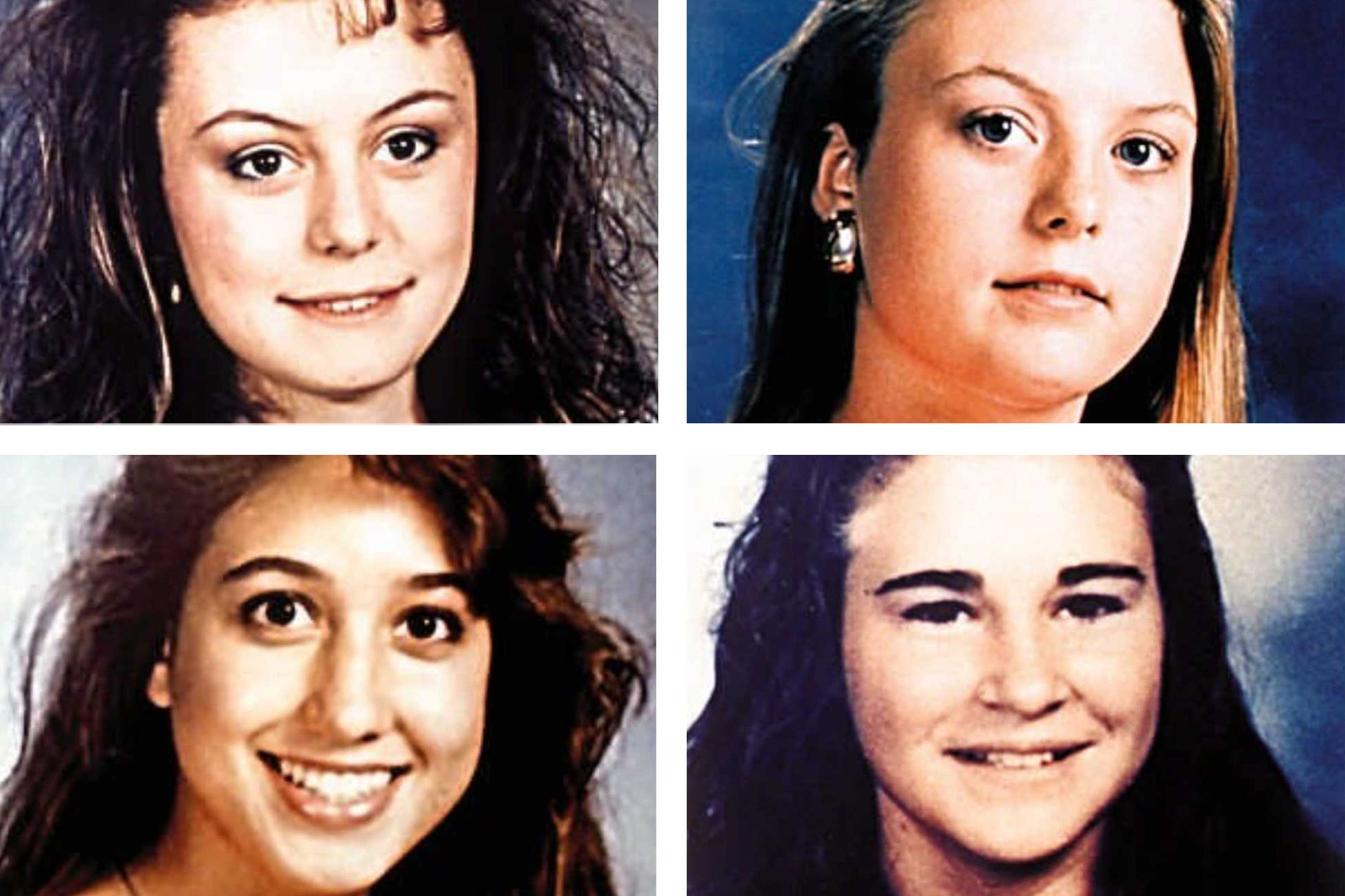
Authorities investigating the 1991 murders of four teenage girls at a North Austin “I Can’t Believe It’s Yogurt” shop believe they have solved the case through newly available DNA testing, closing the chapter on one of the city’s darkest crimes, the American-Statesman has learned.
Top Austin police leaders and cold case detectives plan to announce Monday that they have linked the deaths to a serial killer who died by suicide eight years after the crime. Three officials briefed on the case confirmed the development to the Statesman.
The suspect, Robert Eugene Brashers, was never targeted as the possible murderer during an investigation that spanned 34 years. Brashers had no connection to Austin aside from the gruesome crime.
Article continues below this ad
This undated photo provided by the Missouri State Highway Patrol shows Robert Brashers. Authorities said Friday, Oct. 5, 2018 that DNA evidence has identified Brashers as the man who killed three people and raped a girl in the 1990s, even though the suspect killed himself nearly 20 years ago. Investigators say they’ve solved three homicides and a rape case, all from the 1990s, after obtaining DNA by digging up the corpse Brashers. (Missouri State Highway Patrol via AP)
Missouri State Highway Patrol/via AP
Police relied upon genealogy DNA, which has been used in recent years by law enforcement across the nation to solve cold cases, to identify Brashers. He has been linked to at least three murders across the U.S., but was not connected to those and other crimes until 2018 through the advent of so-called “genetic genealogy.”
The Austin Police Department is expected to deem the yogurt shop murder case closed.
The new DNA matches come in a case that confounded a generation of investigators and left a trail of unresolved grief and trauma among families of the girls and the wider Austin community. The murders of the girls – Jennifer Harbison, 17, her sister, Sarah, 15, Eliza Thomas, 17, and Amy Ayers, 13 – were said to have shattered the city’s innocence and are interwoven into the fabric of Austin.
Article continues below this ad
The Dec. 6, 1991, murders of (clockwise from top left) Jennifer Harbison, Sarah Harbison, Amy Ayers and Eliza Thomas were finally solved, Austin police says.
HANDOUT
The latest revelations in the case will also likely resurrect pain and place a renewed microscope on improper police investigative work decades ago that resulted in the arrest of the four young men linked to the crime, one of whom, Robert Springsteen IV, sentenced to Texas’ Death Row but whose conviction was overturned before he was set to be executed.
The billboard advertising a reward of $125,000 for leads in the Yogurt shop murders. The billboard was at South Congress Avenue and Ben Whilte Boulevard.
American-Statesman file
Filling cabinets at the Austin Police Department’s Homicide Cold Case Unit are still filled with documents and information on the Yogurt Shop Murders, one of the cities most notorious cases in Austin, Texas on Tuesday, August 2, 2011.
American-Statesman 2011 file
Barbara Ayres, one of the parents of the yogurt shop murder victims Jennifer Harbison and Sarah Harbison talks to the media during a press conference. Also present were parents Pam and Robert Ayers, parents of Amy Ayers and James Thomas, parent of Eliza Thomas.
American-Statesman 1999 file
James Thomas (from left), Robert Ayers, Pam Ayers and Barbara Ayres meet the press at a news conference in 1999 to discuss the arrests of suspects in the yogurt shop murders.
American-Statesman 1999 file
Bob and Pam Ayers, left, look as Barbara Suraci, right, explains new brochures and videos available to teens, parents and employers to improve on the job safety for teenagers. The trio formed We Will Not Forget SAJE, Inc. with the proceeds from a settlement with TCBY after their daughters were killed at the Austin yogurt shop five years ago (Dec. 6, 1991).
American-Statesman 1996 file
A 3-D model of the Yogurt Shop Murder is one of several pieces collected over the years investigating the cities infamous homicides in Austin, Texas on Tuesday, August 2, 2011.
American-Statesman 2011 file
District Attorney Rosemary Lehmberg, center, answers questions during a press conference as 1st assistant district attorney, John Neal, assistant district attorney, Efrain De La Fuente, assistant district attorney Gail VanWinkle, Chief Art Acevedo and Detective Ron Lara, left to right background, look on after the state filed for dismissal of indictments against Michael Scott and Robert Springsteen for the Yogurt Shop Murders in 167TH District Court in Austin, Texas, on Wednesday, October 28, 2009.
American-Statesman 2009 file
Yogurt-shop murder suspect Maurice Pierce reacts shortly after learning that he will stand trial as an adult in the case. He was a juvenile at the time the crime was committed in 1991. Dec. 9, 1999
Larry Kolvoord/Austin American-Statesman
Barbara Harbison, whose two daughters were killed in Austin’s infamous yogurt shop murders in 1991. Wednesday, Jan. 22, 2020
Ricardo Brazziell/American-Statesman
A 3-D model of the Yogurt Shop Murder is one of several pieces collected over the years investigating the cities infamous homicides in Austin, Texas on Tuesday, August 2, 2011.
American-Statesman 2011 file
A 3-D model of the Yogurt Shop Murder is one of several pieces collected over the years investigating the cities infamous homicides in Austin, Texas on Tuesday, August 2, 2011.
American-Statesman 2011 file
Filling cabinets at the Austin Police Department’s Homicide Cold Case Unit are still filled with documents and information on the Yogurt Shop Murders, one of the cities most notorious cases in Austin, Texas on Tuesday, August 2, 2011.
American-Statesman 2011 file
The billboard advertising a reward of $125,000 for leads in the Yogurt Shop murders. The billboard was at South Congress Avenue and Ben Whilte Boulevard.
American-Statesman file
The certification hearing of yogurt-shop suspect Forrest Welborn, (left) began today in the 98th District Court in Austin. Maurice Pierce, not shown, was also in the courtroom. District Judge Jeanne Meurer will decide whether to certify these men to stand trial as adults. They were juveniles at the time of the slayings. November 29, 1999.
David Kennedy/Austin American-Statesman
Maurice Pierce photo from the 1991 Lamar Middle School yearbook. This was his second year as a seventh grader, he repeated the grade.
Handout/Austin American-Statesman
Maria Thomas, Barbara Ayres and Pam Ayers, left to right, the mother of Eliza Thomas, sisters, Jennifer and Sarah Harbison, and Amy Ayers leave a press confernce held at the office of Travis County District Attorney, Ronnie Earle, holding door, after making a brief statement in response to the sentencing of Robert Springsteen on Friday, June 1, 2001. Springsteen convicted on Wednesday for the murder of Amy Ayers, one of four girls killed December 6, 1991 at an ‘I Can’t Believe It’s Yogurt’ in Austin, Texas, was sentenced to death.
Rodolfo Gonzalez/Austin American-Statesman
Barbara Ayres, right, mother of Jennifer and Sarah Harbison, reacts outside of the Travis County courtroom where Robert Burns Springsteen IV, 26, was found guilty of capital murder, Wednesday, May 30, 2001. Springsteen was found guilty of capital murder in the shooting of Amy Ayers on Dec. 6, 1991, at an I Can’t Believe It’s Yogurt Shop, where Barbara Ayres’ daughters, Jennifer and Sarah Harbison, along with Eliza Hope Thomas were all killed. Sentencing for Springsteen’s case is scheduled for Thursday. The woman at left is unidentified.
Rodolfo Gonzalez/Austin American-Statesman
Sarah Harbison, yogurt shop murder victim. December 9, 1991.
Handout/Austin American-Statesman
Maurice Pierce, a suspect in the Yogurt Shop murders, left, is lead to a car after an arraingment hearing at the Gardner-Betts Juvenile Detention Center in Austin. Wednesday Oct. 6, 1999
Kevin Virobik-Adams/Austin American-Statesman
Pam Ayers, center, and huband Bob Ayers, right, the parents of Amy Ayers, leave the Travis County courtroom where Robert Burns Springsteen IV, 26, was found guilty of capital murder, Wednesday, May 30, 2001. Springsteen was found guilty of capital murder in the shooting of Amy Ayers on Dec. 6, 1991, at an I Can’t Believe It’s Yogurt Shop, where Ayers, sisters Jennifer and Sarah Harbison, along with Eliza Hope Thomas were all killed. Sentencing for Springsteen’s case is scheduled for Thursday.
Rodolfo Gonzalez/Austin American-Statesman
Bob and Pam Ayers’ 13-year-old daughter, Amy, was among four teenage victims found dead inside the I Can’t Believe It’s Yogurt store in North Austin, which had been robbed and set on fire. Dec. 5, 2021
JAY JANNER/AMERICAN-STATESMAN 20
Pam Ayers, a mother of one of the yogurt-shop murder victims hugs Mike Harbison, father of one of the victims, following District Judge Jeanne Meurer’s decision that Maurice Pierce and Forrest Welborn will stand trial as adults. Dec. 9, 1999
Larry Kolvoord/Austin American-Statesman
Yogurt-shop murder suspect Maurice Pierce reacts shortly after learning that he will stand trial as an adult in the case. He was a juvenile at the time the crime was committed in 1991. Dec. 9, 1999
Larry Kolvoord/Austin American-Statesman
Yogurt-shop murder suspect Maurice Pierce puts his head down on a table after learning that he will be tried as an adult in Judge Jeanne Meurer’s courtroom this afternoon. Dec. 9, 1999
Larry Kolvoord/Austin American-Statesman
District Judge Jeanne Meurer listens to arguments during a cerification hearing for Maurice Pierce and Forrest Welborn this afternoon. She found that the two yogurt-shop murder suspects will stand trial as adults even though they were juveniles when the crime was committed in 1991. Dec. 9, 1999
Larry Kolvoord/Austin American-Statesman
Marisa Pierce with a 2010 photograph that she made of her father, Maurice Pierce. Tuesday, April 5, 2011
Larry Kolvoord/Austin American-Statesman
Edwin Rodriguez, left, and Juan Martinez were standing across the street from the site where suspect Maurice Pierce was shot and killed after he allegedly stabbed an Austin Police officer. Martinez lives in the house across the street from where the incident occurred. APD officers were investigating an officer involved shooting in northwest Austin on Friday, December 24, 2010. This was the scene near the intersection of Shreveport and Campos Streets.
Larry Kolvoord/Austin American-Statesman
This is a handout photo from Marisa Pierce showing her father, Maurice Pierce and Marisa Pierce when she was 7 years-old.
Larry Kolvoord/Austin American-Statesman
The driveway of this house on Campos Dr. is near where suspect Maurice Pierce died after being shot by a police officer. Pierce allegedly stabbed the officer in the neck. APD officers were investigating an officer involved shooting in northwest Austin on Friday, December 24, 2010.
Larry Kolvoord/Austin American-Statesman
Marisa Pierce with a 2010 photograph that she made of her father, Maurice Pierce. Tuesday, April 5, 2011.
Larry Kolvoord/Austin American-Statesman
Crime tape marking the scene where suspect Maurice Pierce was shot and killed after he allegedly stabbed an Austin Police officer. APD officers were investigating an officer involved shooting in northwest Austin on Friday, December 24, 2010. This was the scene near the intersection of Shreveport and Campos Streets.
Larry Kolvoord/Austin American-Statesman
Maurice Pierce speaks at a press conference at the Doubletree Hotel downtown. Behind him is his wife, Kimberly, child, and an unidentified woman (far back). Jan. 30, 2003.
Peter Yang/Austin American-Statesman
Maurice Pierce and his daughter, Marisa Pierce, at her graduation from Creekview High School in Dallas in June 2010.
Handout/Austin American-Statesman
Family hand-out photo….Maurice Pierce in Dallas in 2003. March 22, 2011
Handout/Austin American-Statesman
Maurice Pierce, accompanied by his wife and child, receive directions from his lawyer following the press conference at the Doubletree Hotel downtown. Jan. 30, 2003
Peter Yang/Austin American-Statesman
Suspect Maurice Earl Pierce, right, listens to (attorney?) at the Yogurt shop murder trial scene Monday afternoon in Austin. November 27, 2000
Rebecca McEntee/Austin American-Statesman
Maurice Pierce was swarmed by media as he exited the Travis County Correctional Complex at Del Valle after charges for capital murder in the Yogurt Shop case was dismissed by Travis Colunty District Attorney Ronald Earle Tuesday. Jan. 28, 2003
Sung Park/Austin American-Statesman
Shown in these undated file photos from left are: Eliza Hope Thomas, 17; Amy Ayers, 13; Jennifer Harbison, 17; and Sarah
Handout/Austin American-Statesman
The Yogurt shop murder trial scene Monday afternoon in Austin..Suspects are: Maurice Earl Pierce, second from left sitting and his lawyers Lad Slavik (left) and Guillermo Gonzalez; Michael James Scott, third from left sitting and his lawyers Tony Diaz and Dexter Gilford; and Robert Springsteen, far right. November 27, 2000.
Rebecca McEntee/Austin American-Statesman
Travis County District Attorney Ronald Earle announced Tuesday that charges against Maurice Pierce in the Yogurt Shop capital murder case has been dismissed. Pierce was released within hours from the Del Valle Correctional Complex. Charges were dismissed due to the lack of evidence. Jan. 28, 2003
Sung Park/Austin American-Statesman
Robert Burns Springsteen IV enters the 167th District court on Tuesday morning. Springsteen is accused of murdering a teen-age girl in the I Can’t Believe It’s Yogurt shop on Dec. 6, 1991.
Taylor Johnson/Austin American-Statesman
This undated photo provided by the Missouri State Highway Patrol shows Robert Brashers. Authorities said Friday, Oct. 5, 2018 that DNA evidence has identified Brashers as the man who killed three people and raped a girl in the 1990s, even though the suspect killed himself nearly 20 years ago. Investigators say they’ve solved three homicides and a rape case, all from the 1990s, after obtaining DNA by digging up the corpse Brashers.
Missouri State Highway Patrol/via AP
The murders have drawn fascination among true crime enthusiasts for 34 years, marked with renewed interest through the years by television shows, documentaries and online chat groups. Just six weeks ago, the case received its latest round of national intrigue with the release of a four-part HBO documentary that seeks to underscore the impact of lurid crime media coverage that endures for decades.
Article continues below this ad
At the site today, a ground-level plaque dedicated to the girls stands in the parking lot of the strip mall where the yogurt shop stood.
“Forever in our hearts,” the metal plaque on a granite base says, listing the names of the four girls.
A newly placed yellow rose sits on the memorial for the four victims of the Yogurt shop murders on Anderson Lane.
American-Statesman 1999 file
A case that spans decades
The girls were found around midnight on the night of Dec. 6, 1991, after Austin firefighters responded to the yogurt shop on West Anderson Lane.
Article continues below this ad
Inside, they discovered the girls’ bodies bound, gagged and burned. The shop had been doused with accelerants and set ablaze, severely limiting available forensic evidence. The girls had been shot in the head.
Eight days after the murders, Austin police arrested 16-year-old Maurice Pierce with a .22-caliber revolver at Northcross Mall, a few blocks east of the yogurt shop. Pierce said he had loaned the gun to a friend, Forrest Welborn, 15, who had used it in the yogurt shop murders and told him about it later.
The certification hearing of yogurt-shop suspects Maurice Pierce, (shown) and Forrest Welborn began today in the 98th District Court in Austin. District Judge Jeanne Meurer will decide whether to certify these men to stand trial as adults. They were juveniles at the time of the slayings. November 29, 1999.
David Kennedy/Austin American-Statesman
But police did not charge the men with the murders at the time.
Article continues below this ad
In the first six years of investigation, Austin police followed thousands of leads, questioned numerous suspects and obtained multiple confessions that detectives later discredited. With much fanfare, Mexican authorities announced two months after the murders that they had arrested two men, saying both would be charged with the Austin murders after one had confessed. He later recanted that confession.
A newly created cold case task force in 1999 put the spotlight back on Pierce, Welborn, and two associates, Michael Scott and Springsteen.
Springsteen and Scott confessed, but later recanted, saying they had been coerced by police.
A Travis County jury convicted Springsteen, and he was sentenced to death. Scott was convicted and sentenced to life in prison. The case against Welborn was dismissed, and Pierce later saw his case dismissed due to insufficient evidence.
Article continues below this ad
Springsteen’s conviction was overturned in 2006 on the grounds that his confession was improperly used against him, while Scott’s conviction was overturned the following year on similar grounds. He was never exonerated for the crime.
Robert Springsteen, walks out of 167th District Court a free man after prosecutors filed for dismissal on the homicide indictments against him and Michael Scott for the Yogurt Shop Murders in Austin, Texas, on Wednesday, October 28, 2009.
American-Statesman 2009 file
Prosecutors dismissed the charges against the men in 2009 after new DNA testing excluded them.
Pierce died in December 2010 after an altercation with an Austin police officer, who Pierce stabbed in the neck and who was killed when the officer shot him following a traffic stop.
Article continues below this ad
DNA strand was possible new lead
When she took office in 2017, then District Attorney Margaret Moore worked with Austin police to develop a new task force to pursue the yogurt shop killer.
A new possible lead developed in the case came in 2020, when the American-Statesman reported scientists had been able to develop a male-only strand of DNA from the bodies of one of the girls.
Article continues below this ad
But it is not clear whether or how that lead may have been used to identify Brashers.
Published reports about Brashers’ other crimes share striking similarities to other murder cases, including victims who were bound and shot in the head.
On Friday, Austin police met with the families of the four girls to notify them of the development in the case but they were not immediately available for comment.