


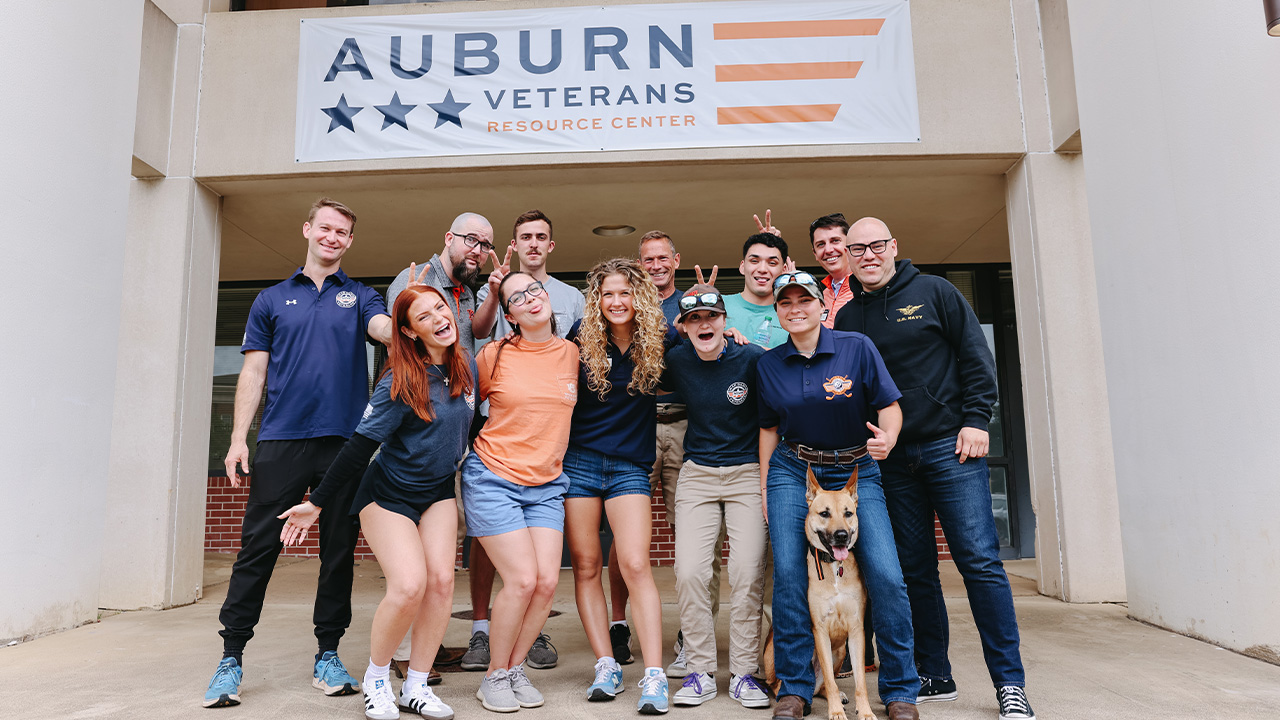
“We identified several that we needed to address, and we did that through building a culture and climate student veterans would want to come to,” Esposito said. “What you don’t want to have is a veteran who is isolated. You want them to have a community as nontraditional students who are typically older, with different life experiences.
“While they’re here relaxing and interacting with others, we can identify what they may be struggling with and create programs to address those needs.”
Initiatives born out of these interactions include specialized math bootcamps and Auburn Warrior Orientation and Learning (AWOL), a peer-to-peer program offered to incoming military-affiliated students.
“There are some misconceptions about veterans and where they fit in on campus,” Esposito said. “Do you treat them differently, or do you not treat them differently? The answer is no — they are students, and they are part of the Auburn Family.
“However, if any organization on campus really wants to learn about what it’s like to be a student veteran in a nontraditional role, we have a training program called Green Zone, and I would highly encourage anyone to take it.”
Green Zone training helps organizations and individuals learn about the military-affiliated experience and promotes the inclusion and support of student veterans on campus.
“The Auburn community is one big family,” Graf said. “Being able to strengthen a portion of the community — in this case, student veterans and military-affiliated students — only strengthens the rest of the student body.”

